
Quick Summary: How do you navigate Kargil City and the Suru Valley by motorcycle?
Quick Answer: Kargil (8,780 ft / 2,676 m) is Ladakh's second-largest city and the strategic transit crossroads connecting the Srinagar-Leh Highway (NH1) with the Zanskar Highway (NH301). Located 216 km west of Leh and 204 km east of Srinagar, it features full-service IOCL/HPCL petrol stations, specialized motorcycle repair workshops, ATMs, and comfortable Class A/B hotels. It serves as the mandatory fuel, spare parts, and acclimatization staging base before riding 230 km south through the rugged Suru Valley, past the 7,000-meter peak views at Panikhar, the hanging icefalls of Parkachik Glacier, and the isolated 18th-century citadel of Rangdum Monastery before crossing Pensi La (14,436 ft) into Padum. No Inner Line Permit is required for Kargil town or the Suru Valley.
The Strategic Crossroad of Western Ladakh: Geography, River Confluences & Historical Silk Route Trading
Answer-First Summary: Nestled at 8,780 ft along the roaring Suru River, Kargil bridges Kashmir, Baltistan, Zanskar, and Central Ladakh.
Descending from the high trans-Himalayan passes of Fotu La (13,479 ft) and Namika La (12,198 ft) from Leh, or traversing the rocky switchbacks of Zoji La (11,575 ft) from Srinagar, motorcycle riders emerge into the bustling mountain bowl of Kargil. Situated at an elevation of 8,780 ft (2,676 m), Kargil is the second-largest urban center and district headquarters of UT Ladakh, serving as the indispensable logistical lifeline of the western frontier.
Geographically, Kargil occupies a dramatic fluvial gorge where the turquoise waters of the Suru River merge with the Wakha and Drass tributaries. For centuries, this strategic river confluence positioned Kargil as a major Silk Route transit junction, where caravans laden with pashmina wool, silk, dry apricots, saffron, and Tibetan salt converged from Yarkand, Kashgar, Srinagar, Skardu, and Leh.
Today, the city retains its distinct cosmopolitan heritage, blending Balti, Purig, Kashmiri, and Drokpa cultures. Unlike the Buddhist-dominated gompa valleys of Central Ladakh, the streets of Kargil echo with the calls to prayer from historic Shia mosques, bustling dry fruit bazaars, and traditional copper artisan workshops.
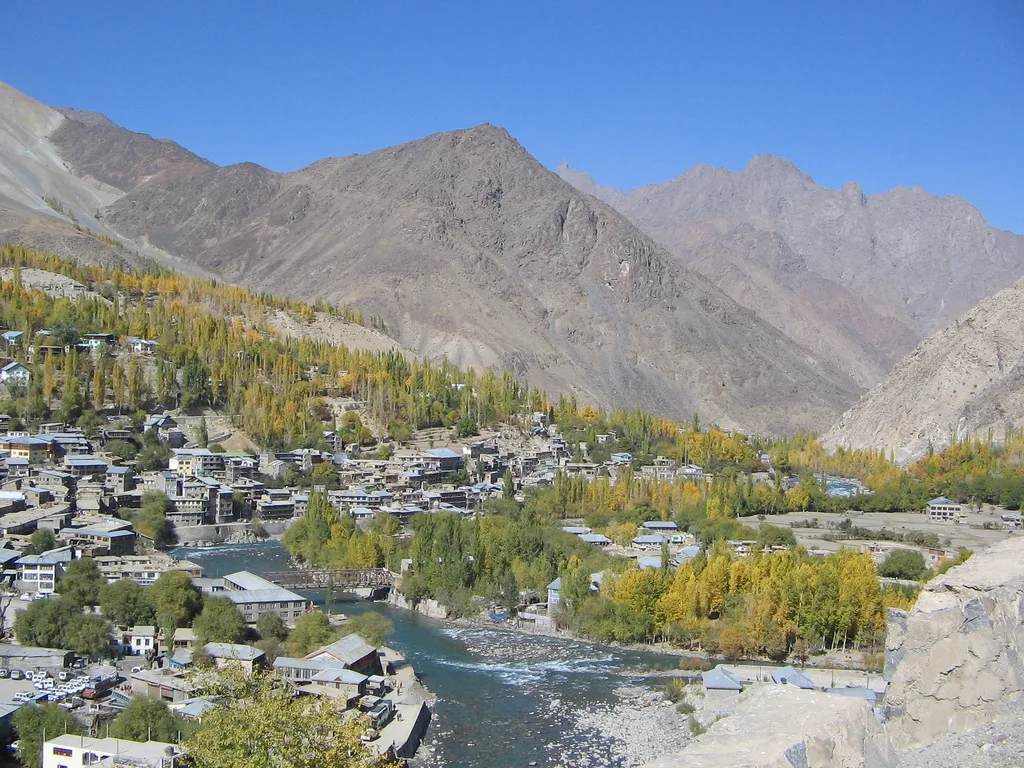
For motorcyclists, Kargil is not merely a scenic pitstop - it is the operational pivot point of the western Himalayas. It is here that National Highway 1 branches south into National Highway 301, the rugged 230 km artery traversing the magnificent Suru Valley over Pensi La into the heart of Zanskar.
Suru Valley Highway (NH301): Riding the Green Heartland to Sankoo, Panikhar & Nun-Kun Massifs
Answer-First Summary: Navigating the lush lower valley tarmac, willow groves, and towering 7,000-meter glaciated Himalayan peaks.
Leaving the urban density of Kargil town heading south along NH301, riders enter the enchanting Suru Valley - frequently described by seasoned riders as the greenest and most dramatically sculpted alpine corridor in Ladakh. The initial 42 km from Kargil to Sankoo features well-paved, winding single-to-two-lane asphalt tracing the rushing Suru River through verdant terraced fields of barley, fragrant poplar groves, and blossoming apricot orchards.
Sankoo (elevation 9,500 ft) is a major agrarian market village offering roadside dhabas, local bakeries selling fresh Balti tandoori roti, and emergency puncture repair stalls. Continuing 25 km further south brings you to Panikhar (10,200 ft), where the valley dramatically widens to reveal the colossal twin glaciated giants of the Greater Himalayan Range: Mount Nun (7,135 m / 23,409 ft) and Mount Kun (7,077 m / 23,218 ft).
The sight of Nun's sheer pyramid of white ice rising over 13,000 feet directly from the emerald valley floor is one of the most staggering vistas on earth. The asphalt terminates past Panikhar near Parkachik (km 85 from Kargil), where the massive Parkachik hanging glacier calves directly into the roaring Suru torrent. From this point southward toward Rangdum and Pensi La, the road degrades into an adventurous alpine gravel-and-dirt trail demanding full standing dual-sport riding technique.
Critical Fuel Strategy & 230 km Zanskar Dead Zone Math: Preparing in Kargil
Answer-First Summary: Senior Fleet Mechanic Stanzin Dorje outlines the absolute zero-fuel corridor between Kargil and Padum.
At Ride & Fire Rentals, we cannot overstate the absolute criticality of fuel preparation in Kargil. Kargil is your final opportunity to purchase commercial, metered retail petrol before embarking on the grueling 230 km journey to Padum in Zanskar.
OFFICIAL PETROL PUMPS IN KARGIL: Kargil features two reliable retail filling stations: the Indian Oil (IOCL) pump at Baroo and the HPCL pump near Biamathang. Both stations generally operate from 06:30 AM to 08:30 PM and stock standard 87/89 octane petrol. Always fill your motorcycle's main fuel tank to 100% capacity the evening before your departure to avoid morning queues with local transport trucks.
THE 230 KM ZERO-PUMP DEAD ZONE: There are NO commercial retail petrol pumps in Sankoo, Panikhar, Parkachik, Rangdum, or atop Pensi La. The next official fuel station is in Padum - 230 km away over high alpine terrain. While occasional villagers in Sankoo or Rangdum may offer black-market petrol from jerry cans at inflated rates (₹140 to ₹180/liter), this fuel is frequently adulterated with kerosene or contaminated with water and sediment, which will instantly clog your fuel injector nozzle or carburetor pilot jet.
FUEL CONSUMPTION MATH ON HEAVY GRAVEL: A motorcycle like the Royal Enfield Himalayan 450 that delivers 28 km/L on NH1 asphalt will drop to 18-20 km/L when grinding through deep gravel, mud, and water crossings in 2nd and 3rd gear between Parkachik and Padum. A 230 km run under these conditions requires roughly 12 to 14 liters of fuel. To ensure a mandatory 25% safety reserve against route blockages or detours, every motorcycle heading to Padum must carry at least 5 to 7 liters of extra petrol in certified, leak-proof fuel bladders or jerry cans strapped to the crash guards or tail rack.
Mechanical Workshops, Spare Parts & Pre-Zanskar Shakedown in Kargil
Answer-First Summary: Where to find skilled Royal Enfield mechanics, clutch cable replacements, and suspension tuning.
The rocky terrain of the Suru Valley and Zanskar is punishing on motorcycle running gear. Kargil is your last civilized hub equipped with professional mechanical tooling, welding shops, and motorcycle spare parts.
MECHANIC CLUSTER: The primary motorcycle repair workshops are concentrated along the Main Bazar and near the New Bus Stand in Kargil. Local mechanics here possess vast experience tuning Royal Enfields, Bajaj Pulsars, and dual-sport bikes navigating the trans-Himalayan circuits. Before riding toward Suru or Zanskar, perform the following mandatory checklist:
1. DRIVE CHAIN TENSION & LUBRICATION: Rough corrugated gravel rapidly stretches drive chains. Adjust your chain slack to 25-30 mm (leaving slight extra play to prevent binding as the rear monoshock compresses over deep potholes) and apply heavy-duty wax chain lubricant.
2. SPOKE TENSION & RIM TRUING: Ping your wheel spokes with an 8mm wrench; a dull thud indicates loose spokes that will buckle under the impact of sharp river stones along the Suru. Have a local mechanic true the rims.
3. SPARE CONTROL CABLES: Buy a spare clutch cable, front brake lever, and throttle cable. Zip-tie the spare clutch cable parallel to your existing cable on the handlebar so that if your cable snaps on Pensi La, you can swap the nipples in under two minutes without disassembling the fuel tank.
4. AIR FILTER INSPECTION: After riding through the dusty shale hairpins of Fotu La or Namika La, remove your seat and tap out the paper air filter element. A clean air intake is critical for maintaining combustion efficiency as you climb past 14,000 feet.
Hotel Stays, Guesthouses & Culinary Delights: Where to Rest in Kargil Town
Answer-First Summary: Class A hotels, safe enclosed motorcycle parking, and authentic Balti-Kashmiri culinary recommendations.
After covering 200+ km of mountain riding, getting quality rest and secure parking is essential. Kargil provides a comprehensive range of accommodations suited to every budget.
HOTEL SELECTION & SAFE BIKE PARKING: We recommend booking accommodations in the quieter Baroo or Biamathang green belts rather than the congested central market. Established properties such as Hotel The Kargil, PC Palace, and Rangyul Resort offer gated, secure parking courtyards where your motorcycle and strapped luggage can sit safely overnight under CCTV surveillance. Expect to pay ₹2,500 to ₹5,500/night for premium rooms with hot running water and Wi-Fi, or ₹800 to ₹1,800/night for budget transit guesthouses.
ATM CASH RESUPPLY: Kargil is your final banking oasis. The city has multiple operational ATMs belonging to the State Bank of India (SBI) and Jammu & Kashmir Bank (JK Bank) in the main market. Because internet connectivity and cellular networks are virtually nonexistent once you pass Panikhar into Zanskar, card swipe POS machines and UPI QR codes will fail completely. Withdraw sufficient hard currency in Kargil (minimum ₹8,000 to ₹12,000 per rider) to cover all homestay accommodation, food, and fuel expenses in Zanskar.
CULINARY HIGHLIGHTS: Don't leave Kargil without sampling authentic local cuisine. Order a bowl of traditional Balti Prapoo (thick handmade wheat noodles tossed in a rich, nutty walnut and dried apricot kernel paste), steaming Kashmiri mutton Rogan Josh, and fragrant saffron Kahwa tea infused with crushed green cardamom and almonds.
Cultural & Historical Exploration: Munshi Aziz Bhat Museum & Hunderman Border Village
Answer-First Summary: Discovering Silk Road mercantile artifacts and exploring the partition history of Hunderman.
If your expedition schedule permits an extra half-day in Kargil, two cultural destinations provide profound historical insight beyond the typical highway tourist experience.
MUNSHI AZIZ BHAT MUSEUM OF CENTRAL ASIAN TRADE: Located along the riverbank in Kargil, this family-curated museum preserves one of the most astonishing private archives of Silk Route commerce in Asia. The collection features authentic artifacts salvaged from ancient caravan trunks: 100-year-old horse saddles, hand-spun Yarkandi carpets, brick tea from China, ancient camel bells, British trade passes, and antique coins. It paints a vivid portrait of Kargil's golden age as a trans-continental trading crossroads.
HUNDERMAN BORDER VILLAGE (MUSEUM OF MEMORIES): Perched on a precipitous cliff 10 km north of Kargil along the Line of Control (LoC) with Pakistan lies Hunderman. Once part of Pakistani-administered Gilgit-Baltistan, Hunderman came under Indian control during the 1971 Indo-Pakistani War. Today, local youth have converted ancient stone houses into the 'Museum of Memories', exhibiting vintage medicine tins, identity documents, and personal letters telling the poignant human story of families separated by geopolitical borders.
Permit Regulations, Checkposts & LMBRA Union Guidelines in Kargil
Answer-First Summary: Understanding permit exemptions, Drass/Kargil checkposts, and local Leh bike rental union boundaries.
Navigating bureaucratic regulations in Kargil is remarkably straightforward compared to the sensitive border frontiers of Eastern Ladakh.
NO INNER LINE PERMIT REQUIRED: Indian domestic tourists and foreign nationals do NOT require an Inner Line Permit (ILP) or Protected Area Permit (PAP) to visit Kargil town, ride through the Suru Valley, or travel across Pensi La into Padum (Zanskar). The entire NH1 corridor and NH301 are categorized as open transit highways.
CHECKPOINT DOCUMENT VERIFICATION: You will encounter police checkposts at Drass, the Kargil entry gate (Karu bridge), and Sankoo. Always carry your original driving license, motorcycle registration certificate (RC), valid third-party insurance, and a physical printed government ID (Aadhaar or Passport). Keep 3 to 4 photocopies handy for swift checkpost stamping.
LMBRA UNION RULES: Under the regulations of the Ladakh Motorcycle & Bike Rental Association (LMBRA), non-local commercial rental motorcycles (such as bikes rented in Delhi, Manali, Chandigarh, or Srinagar with DL, HP, or HR plates) are legally permitted to ride through Kargil along the NH1 highway corridor. However, if you plan to use Kargil as a base to explore internal off-highway circuits in Ladakh, renting an authentic local LA-02 commercial yellow-plate machine from Ride & Fire Rentals in Leh guarantees complete compliance and zero friction at local checkpoints.
Itinerary Architectures: The Classic 2-Day Transit vs 4-Day Zanskar Deep Exploration
Answer-First Summary: Tactical timetables for riding Leh to Srinagar or descending into the heart of Padum.
Depending on your expedition goals, Kargil serves as either a high-speed overnight rest stop or the launchpad for high-adventure Zanskar exploration.
ITINERARY A: THE TRANS-HIMALAYAN TRANSIT (Leh to Srinagar via Kargil - 2 Days). Day 1: Depart Leh at 08:00 AM, cross Fotu La (13,479 ft) and Namika La (12,198 ft), stopping at Lamayuru and Mulbekh Chamba. Arrive in Kargil by 04:30 PM (216 km) for an overnight hotel stay. Day 2: Depart Kargil at 07:30 AM, visit the Drass Kargil War Memorial (56 km), cross the formidable Zoji La pass (11,575 ft), and descend into Sonamarg and Srinagar by late afternoon.
ITINERARY B: THE ZANSKAR EXPEDITION LOOP (Kargil to Padum - 2 to 3 Days). Day 1: Full day in Kargil tuning bikes, topping up jerry cans, and visiting the Munshi Aziz Bhat Museum. Day 2: Depart Kargil at 06:30 AM on NH301. Ride 85 km through Sankoo and Panikhar with front-row views of Nun-Kun. Traverse the rugged gravel shelf roads to Rangdum (130 km) for a rustic homestay night at 13,200 ft. Day 3: Cross the glacial summit of Pensi La (14,436 ft), marvel at the vast Drang Drung Glacier, and descend into Padum (100 km) for complete Zanskar valley exploration.
Route Milestones, Elevation & Road Conditions
| Milestone | Elevation (ft / m) | Distance from Kargil | Key Facilities & Highway Telemetry |
|---|---|---|---|
| Drass War Memorial | 10,800 ft / 3,292 m | 56 km West | Operation Vijay museum, army cafe, Wall of Heroes. |
| Kargil City Center (Baroo) | 8,780 ft / 2,676 m | 0 km | Major city, IOCL & HPCL pumps, mechanics, ATMs, hotels. |
| Sankoo Village Market | 9,500 ft / 2,895 m | 42 km South | Suru Valley trade hub, roadside dhabas, puncture repair. |
| Saliskot Junction | 9,800 ft / 2,987 m | 52 km South | Scenic valley road, traditional mud-brick farmsteads. |
| Panikhar Village | 10,200 ft / 3,109 m | 68 km South | Direct views of Nun (7,135m) & Kun (7,077m), guesthouses. |
| Parkachik Village & Glacier | 11,500 ft / 3,505 m | 85 km South | Hanging glacier viewpoint, tarmac ends, rough dirt begins. |
| Rangdum Gompa & Plains | 13,200 ft / 4,023 m | 130 km South | 18th-century monastery, isolated plain, basic homestays. |
| Pensi La Pass Summit | 14,436 ft / 4,400 m | 155 km South | Gateway to Zanskar, twin glacial tarn lakes, prayer flags. |
| Drang Drung Glacier View | 14,500 ft / 4,420 m | 157 km South | Massive 23 km white river of ice, roadside viewpoint. |
| Abran & Padum Approach | 12,200 ft / 3,718 m | 200 km South | First Zanskari villages, river crossing bridges, wide valley. |
| Padum (Zanskar Capital) | 11,680 ft / 3,560 m | 230 km South | Fuel pump, hotels, homestays, gateway to Phugtal & Shinku La. |
Ready for Your Ladakh Motorcycle Adventure?
Navigating the complex checkpoints and steep elevations of UT Ladakh requires both legal compliance and mechanical reliability. At Ride & Fire Rentals, we offer locally registered motorcycles with the mandatory LA-02 yellow commercial plates, ensuring you clear every military and union checkpoint seamlessly. Our fleet is 100% fuel-injected and thoroughly checked before every handover at our Changspa Road workshop.
For external travel planning references, you can check the official Ladakh Tourism Portal or apply for permits via the LAHDC Leh Permit Portal.
Season Launch Offer
Book your motorcycle direct from our Changspa Road facility. Get a standard 25% direct booking discount, plus enter coupon code LADAKH5 at checkout for an extra 5% off (saving nearly 30% total) on your entire rental! This promotion is active until June 30.
Suru River Crossing Dynamics & Hydrostatic Lock Prevention on the Zanskar Approach
Answer-First Summary: Mastering glacial melt torrents, water crossing entry angles, and emergency airbox protocols between Parkachik and Rangdum.
As riders venture south of Parkachik along NH301 toward Rangdum, the asphalt disappears and the route encounters numerous unbridged glacial runoff torrents (locally known as nallahs) tumbling directly off the Nun-Kun icefields into the roaring Suru River.
DIURNAL MELT WATER CYCLES: Glacial streams exhibit extreme diurnal volume fluctuations. At 07:00 AM, the water is typically ankle-deep, clear, and easily navigable as overnight freezing slows glacier melting. By 02:00 PM, radiant solar energy accelerates glacial ablation, transforming small streams into roaring, knee-deep brown torrents carrying heavy boulder scree. Always cross the major water sectors early in the morning.
RIDING TECHNIQUE IN FAST CURRENT: Stop before entering an unfamiliar water crossing. Walk the line if depth is uncertain, feeling for submerged melon-sized boulders and deep silt pockets with your boots. Select 1st gear, stand squarely on the footpegs with knees slightly bent, and maintain a steady, positive throttle opening. NEVER drop the throttle abruptly in mid-stream; closing the throttle can create negative exhaust pressure that sips cold water up through the exhaust pipe into the engine.
AVOIDING HYDROSTATIC LOCK: If your motorcycle stalls in deep water, RESIST THE URGE TO HIT THE ELECTRIC STARTER. If water has entered the airbox and been drawn into the combustion chamber, cranking the engine will cause hydrostatic lock - water cannot compress, resulting in instantly bent connecting rods, cracked pistons, or shattered starter gears.
EMERGENCY WATER RECOVERY PROTOCOL: Push the stalled bike out of the stream onto dry ground. Unscrew the spark plug with your toolkit plug wrench. Disconnect the air filter element and drain any pooled water from the bottom of the airbox drain nipple. With the spark plug removed, engage 2nd gear and spin the rear wheel by hand or crank the starter for 3 seconds to pump water out of the spark plug hole like a geyser. Dry the spark plug electrode, reassemble, and start the engine with gentle throttle.
Frequently Asked Questions
Are there petrol pumps in Kargil city, and where are they located? +
Yes. Kargil features two reliable commercial petrol stations: the Indian Oil (IOCL) pump at Baroo and the HPCL pump at Biamathang. Both operate from 06:30 AM to 08:30 PM. Riders heading south into Zanskar must top up completely here, as there are no official petrol pumps for the next 230 km until Padum.
Do I need an Inner Line Permit (ILP) to visit Kargil or the Suru Valley? +
No. Neither Indian domestic travelers nor foreign tourists require an Inner Line Permit (ILP) or Protected Area Permit (PAP) to visit Kargil, explore the Suru Valley, or ride to Padum in Zanskar. These routes are designated as open national transit corridors.
What are the road conditions between Kargil and Padum (Zanskar)? +
The 230 km route consists of two distinct segments: the first 85 km from Kargil past Sankoo to Parkachik is mostly paved single-to-two-lane asphalt. From Parkachik through Rangdum and across Pensi La (14,436 ft) to Padum, the road is an unpaved, rough alpine track featuring loose gravel, mud, and water crossings.
Where can I find motorcycle repair mechanics in Kargil? +
Specialized motorcycle mechanics and puncture repair shops are clustered along the Main Bazar and near the New Bus Stand in Kargil. They can handle oil changes, chain adjustments, spoke tightening, and common Royal Enfield mechanical repairs.
Are ATMs available and reliable in Kargil? +
Yes. Kargil has multiple operational ATMs belonging to the State Bank of India (SBI) and Jammu & Kashmir Bank. Riders must withdraw sufficient cash here, as there are no functioning ATMs or cellular networks in the Suru Valley or along the route to Zanskar.
What is the best time of year to ride through Kargil and Suru Valley? +
The prime riding season is from late May to mid-October. During winter (November to May), heavy snowfall completely closes the Zoji La pass toward Srinagar and the Pensi La pass toward Zanskar.
How long does it take to ride from Leh to Kargil? +
The 216 km ride from Leh to Kargil via NH1 typically takes 5 to 6.5 hours of steady riding, factoring in brief stops at Gurudwara Pathar Sahib, Lamayuru Monastery, and Mulbekh Chamba.