
Quick Summary: What makes the Central Asian Museum in Leh a must-visit cultural landmark?
Quick Answer: Constructed as a modern tribute to Leh's historic status as the crossroads of the Silk Route, the Central Asian Museum stands within a former caravan camping ground in Old Town. Built in the monumental Tibetan Lhasa stone-and-timber tower style, its four vertical gallery floors exhibit authentic caravan trade artifacts from Yarkand, Kashgar, Khotan, Tibet, and Kashmir - including ancient ledger books, pashmina scales, caravan saddles, and bronze teapots - all while offering a zero-altitude-strain Day 1 acclimatization visit.
The Trans-Himalayan Crossroads: Leh as the Silk Route's Greatest High-Altitude Emporium
Answer-First Summary: How Leh transformed from a remote mountain hamlet into the bustling trading nexus of Inner Asia.
Long before adventure motorcyclists loaded aluminum panniers to traverse the world's highest motorable passes, the high mountain passes of Ladakh resonated with the rhythmic clatter of pack mules, two-humped Bactrian camels, and heavily laden yaks. For over five centuries, Leh occupied one of the most critical geographical intersections on earth: the convergence of the southern branches of the Great Silk Route connecting Central Asia, Tibet, Northern India, and China.
Caravans embarked on perilous multi-month treks from Kashgar, Yarkand, and Khotan across the dreaded Taklamakan Desert and the frozen 18,290-foot Karakoram Pass. Simultaneously, wool merchants from Western Tibet drove thousands of sheep carrying bundles of raw pashmina toward the Indus Valley, while Kashmiri traders ferried saffron, brocades, and spices northward through the Zoji La corridor. Leh was the mandatory resting emporium where these disparate worlds converged to negotiate, barter, exchange currencies, and rest before undertaking the return march.
The Central Asian Museum in Leh (CAML) was conceived and constructed to preserve and celebrate this extraordinary commercial and human heritage. Rising in the heart of the historic Old Town, the museum transports visitors back to an era when Leh was a cosmopolitan melting pot of Uyghur merchants, Tibetan lamas, Punjabi bankers, and Ladakhi horse-breeders. For travelers renting their dual-sport machines with Ride & Fire Rentals, the museum provides the essential historical context that illuminates every trail and mountain pass you will ride across Ladakh.
As you step inside the museum compound, you walk upon the actual grounds of the Tsas Soma - the historic 'New Garden' caravan serai where foreign merchants camped under the shade of ancient willow trees, unloaded their cargo bales, and allowed their pack animals to graze after surviving the lethal blizzards of the northern passes.
Monumental Lhasa Tower Architecture: Stone, Timber & Earthquake Engineering
Answer-First Summary: Analyzing the four-tiered Tibetan stone masonry, cantilevered wooden balconies, and seismic resilience.
The architecture of the Central Asian Museum is a living masterpiece of traditional Himalayan engineering, designed through an international collaboration between the Tibet Heritage Fund (THF) and the Leh Old Town community.
THE MONUMENTAL LHASA TOWER FORM: Unlike modern concrete structures that mar portions of modern Leh, the museum building was erected as a soaring four-story stone-and-timber tower modeled after the historic stone fortifications and aristocratic residences of Lhasa and southern Tibet. The walls taper inward as they rise, creating a trapezoidal silhouette that lowers the structure's center of gravity and provides exceptional structural stability during seismic tremors.
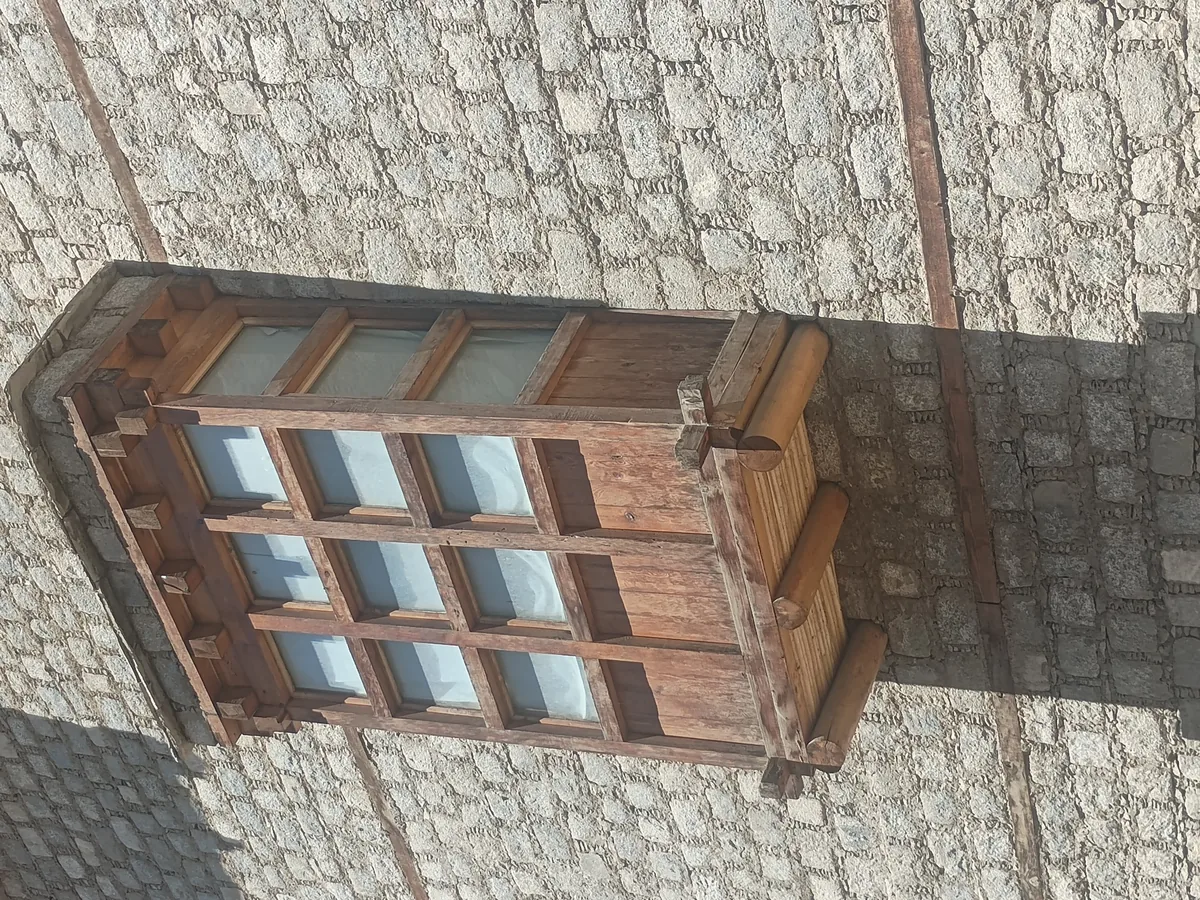
TRADITIONAL MASONRY & JOINERY: The exterior walls are constructed from hand-chiseled local granite bonded with mud mortar and reinforced with horizontal wooden tie-beams (timbers) embedded directly into the stone courses. This traditional earthquake-resistant engineering - known across the Himalayas as cator-and-cribbage - allows the building to flex naturally during earthquakes without structural fracture. The upper levels feature ornate cantilevered balconies and window lintels carved from local cedar and willow timber by master Ladakhi craftsmen.
THE INTERIOR SANCTUARY & COURTYARD: Inside, each floor is accessed via solid timber staircases lit by narrow vertical slit windows designed to keep the galleries cool during scorching summer afternoons while trapping radiant heat during the brutal sub-zero Ladakhi winter.
THE ROOFTOP PANORAMIC LOOKOUT: Crowned by a traditional slate-and-timber roof parapet, the top floor provides a stunning 360-degree vantage point overlooking the rooftops of Old Town Leh, the soaring mud-brick façade of Leh Palace, and the snow-capped massif of Stok Kangri across the Indus Valley.
Curated Gallery Levels: From Yarkandi Saddles to Ancient Tibetan Manuscripts
Answer-First Summary: A floor-by-floor journey through the museum's specialized historical and cultural collections.
The Central Asian Museum's exhibition space is arranged across four thematic levels, guiding visitors through the complex commercial and social fabric of the trans-Himalayan caravan network.
LEVEL 1: LADAKH HERITAGE & CARAVAN ROOTS: The ground floor introduces visitors to the geography and daily life of pre-modern Ladakh. Displays include agricultural implements used in high-altitude barley farming, stone flour-mill grinding wheels, traditional kitchen copperware (zangs), and antique handlooms used to weave thick pattu wool fabric.
LEVEL 2: THE CARAVAN TRADE & YARKAND GOODS: The second level represents the commercial heart of the museum. Here you will find original leather pack saddles, brass camel bells, hand-forged horseshoe sets, and antique balance scales used by merchants to weigh raw pashmina fibers with milligram accuracy. Unique artifacts include antique tea bricks stamped with Chinese imperial dynastic seals, rolls of Chinese silk, hand-knotted Yarkandi wool rugs, and carved jade snuff bottles carried by Uyghur traders.
LEVEL 3: TIBETAN BUDDHIST & CULTURAL SACRED ART: The third floor explores the spiritual connections linking Ladakh, Western Tibet (Ngari), and Lhasa. On display are hand-illuminated religious manuscripts written in gold and silver ink on black bark paper, 17th-century bronze votive statues of Green Tara and Padmasambhava, antique prayer wheels, and ceremonial bone trumpets (kangling) used in tantric monastic rituals.
LEVEL 4: ISLAMIC HERITAGE & BALTI INFLUENCE: The fourth level documents the deep historical presence of Islam in Ladakh, highlighting the peaceful coexistence of Buddhist and Muslim communities. It features antique calligraphy pens, hand-copied Qurans dating to the 18th century, decorative brass prayer bowls, and silver jewelry crafted by Baltistani silversmiths.
The Caravanserai Legacy: Pashmina, Charas & Tea Brick Economics
Answer-First Summary: Examining the immense economic forces and commodities that drove trade through Leh.
To appreciate the significance of Leh's caravan history, one must understand the astronomical value of the commodities exchanged in its dusty bazaars.
THE PASHMINA MONOPOLY: Ladakh's greatest economic asset was its geopolitical stranglehold over raw pashmina wool. By royal treaty signed in 1684 (The Treaty of Tingmosgang), the kings of Ladakh held exclusive legal rights to purchase all raw cashmere wool produced by the nomadic Changpa tribes of Western Tibet. This precious fiber was transported by yak caravans to Leh, where Kashmiri merchant guilds purchased it under royal monopoly to feed the royal shawl-weaving looms of the Kashmir Valley.
CHARAS & YARKAND NARCOTICS: From Chinese Turkestan (Xinjiang), caravans brought hundreds of horse-loads of high-grade cannabis resin (charas). Up until its prohibition in the mid-20th century, charas was a fully legal and heavily taxed trade commodity. Dogra customs posts in Leh collected massive transit duties on every charas serai, generating immense revenue for the Jammu and Kashmir princely treasury.
TEA BRICKS AS CURRENCY: In high-altitude Central Asia, compressed fermented tea bricks often served as a more stable medium of exchange than paper or silver currency. Travelers could shave off portions of a tea brick to brew butter tea (gur-gur chai) for survival, or exchange an intact brick for fresh pack horses, winter grain, or warm sheepskin coats.
Senior Fleet Mechanic Advice: Town Riding Throttle Response & Brake Heat
Answer-First Summary: Stanzin Dorje shares essential insights on stop-and-go town riding, brake disc glazing, and air filter maintenance.
Urban riding around Leh may appear gentle compared to crossing Khardung La, but slow-speed urban riding presents its own specific mechanical pitfalls.
BRAKE DISC GLAZING IN STOP-AND-GO TRAFFIC: Crawling through downhill Old Town alleys causes riders to ride the rear brake continuously. This generates excessive surface heat on the brake rotor without allowing airflow cooling, causing the organic brake pads to glaze over and lose friction bite. PILOT TIP: Rely on engine braking in 1st gear rather than dragging your brake pedal. If your rear brake pedal feels spongy or emits a burning odor, pull over and allow the caliper to cool for 15 minutes.
DUST INGESTION IN CONGESTED STREETS: Leh's unpaved alley edges and bustling town traffic stir up fine granite dust that quickly coats motorcycle air filters. When rental machines undergo multiple days of town riding, the air filter element can become partially clogged, leading to sluggish throttle response and increased fuel consumption. At Ride & Fire Rentals, our mechanics blow out every air filter with compressed air before handing over machines for long-distance expeditions.
CHAIN LUBRICATION IN DUSTY URBAN ENVIRONMENTS: Avoid using heavy, wet, sticky chain lubes when cruising around Leh town. Sticky lubricants attract fine airborne dust, forming an abrasive grinding paste that rapidly destroys drive chain O-rings and sprocket teeth. Use specialized dry-wax chain lubricants that dry completely on the rollers.
The Perfect Acclimatization Stroll: Low-Impact Cultural Immersion at 11,500 Feet
Answer-First Summary: Why this museum represents an essential medical stop during your first 48 hours in Leh.
For riders who have just flown into Kushok Bakula Rimpochee Airport (IXL), managing physical exertion during the first 24 to 48 hours is vital to preventing Acute Mountain Sickness (AMS), as detailed in our Leh Acclimatization Guide.
GENTLE HORIZONTAL WALKING: Unlike climbing the vertical staircases of Leh Palace or hiking the steep ridge to Namgyal Tsemo, visiting the Central Asian Museum involves gentle horizontal walking through tree-shaded courtyards. The museum's interior floors are connected by wide, comfortable wooden stairs that allow you to explore at your own pace without inducing heavy breathing or tachycardia.
RESTFUL COURTYARD SANCTUARY: The museum grounds include peaceful willow gardens with traditional wooden benches where you can sit quietly, sip warm ginger-honey-lemon tea, and hydrate while your body naturally adapts to the 35% decrease in atmospheric oxygen.
MONITORING ACCLIMATIZATION SIGNALS: Spending two hours here gives you a comfortable baseline to check your physical condition. If you feel any mild nausea, lightheadedness, or throbbing temples, central Leh's medical clinics and pharmacies are just a two-minute walk away.
Connecting the Silk Route Trail: Leh City Heritage Walking Loop
Answer-First Summary: Integrating the Central Asian Museum with Jama Masjid, Datun Sahib, and Old Town heritage homes.
The Central Asian Museum serves as the perfect anchor for a comprehensive cultural exploration of Old Town Leh.
THE JพิA MASJID CONVERGENCE: Immediately adjacent to the museum stands the historic Jama Masjid of Leh, erected in 1666-67 CE under a treaty between the Ladakhi King Deldan Namgyal and the Mughal Emperor Aurangzeb. Its towering minarets and carved timber prayer hall reflect the centuries-old Islamic heritage of the caravan trade.
THE SACRED TOOTH-STICK TREE: A two-minute walk north along the cobblestone lane brings you to Datun Sahib - the venerated mesquite tree believed to have sprouted from the tooth-stick (datun) discarded by Guru Nanak during his spiritual sojourn through Ladakh in 1517 CE.
LALA'S ART CAFE & RESTORED HOMES: Continue your walk past the restored mud-and-timber heritage homes maintained by the Tibet Heritage Fund, and stop for a refreshing seabuckthorn juice at Lala's Art Cafe, a beautifully preserved former royal kitchen house.
Visiting Logistics, Timings & Entry Ticket Details
Answer-First Summary: Operating hours, ticket costs, camera rules, and seasonal winter schedules.
Planning your visit to the Central Asian Museum is straightforward and accommodates both quick drop-ins and detailed historical study.
OPENING HOURS & SEASONAL SCHEDULE: The museum is open Monday through Saturday from 10:00 AM to 06:00 PM during the peak tourist season (May to October). On Sundays, the museum is typically closed or opens with reduced afternoon hours. During the winter months (November to April), opening hours are restricted to 11:00 AM to 04:00 PM.
NOMINAL ENTRY FEES: Admission is ₹50 for Indian nationals and ₹100 for foreign visitors. Entry for students with valid identification is ₹30. Tickets can be purchased at the small wooden booth at the entrance gate.
PHOTOGRAPHY REGULATIONS: Photography without flash is permitted inside the galleries. Video recording and professional commercial tripods require prior written permission from the museum curator. Mobile phone cameras are welcome throughout the courtyard and rooftop terrace.
GUIDED TOURS & LIBRARY: The museum houses a specialized reference library containing rare historical volumes on Central Asian geography, Silk Route expeditions, and Himalayan linguistics. Knowledgeable local guides are often available on-site to provide detailed explanations of specific artifacts.
Mechanical Expedition Briefing: Preparing for the Real Silk Route Passes
Answer-First Summary: Transitioning from caravan history to riding the modern trans-Himalayan passes on two wheels.
As you stand in the museum looking at the antique saddles and camel bells that crossed the high passes a century ago, remember that you are about to ride the modern motorable descendants of those very same trails.
THE MODERN HIGH-ALTITUDE TRAILS: The ancient caravan route to Yarkand climbed out of the Nubra Valley across Saser La (17,753 ft) and Karakoram Pass (18,290 ft). Today, adventure motorcyclists ride the world's highest asphalt ribbons over Khardung La (17,982 ft) into Nubra, cross Chang La (17,688 ft) toward Pangong Tso, and summit the astronomical heights of Umling La (19,024 ft).
MODERN MACHINES VS. ANCIENT PACK HORSES: Where Silk Route merchants required weeks to cross from the Indus to the Shyok River, modern machines like the Royal Enfield Himalayan 450 or Scram 411 cover the distance in a single morning. Yet the fundamental mountain rules remain unchanged: respect the weather, carry ample emergency supplies, monitor your physical altitude symptoms, and ensure your machine is in peak mechanical health before leaving the security of Leh.
Route Milestones, Elevation & Road Conditions
| Milestone / Location | Elevation (ft / m) | Distance from Leh Center | Key Features & Heritage Telemetry |
|---|---|---|---|
| Ride & Fire Basecamp (Changspa) | 11,562 ft / 3,524 m | 0 km | Fleet pickup, workshop, gear fitting, route briefings. |
| Polo Ground Two-Wheeler Parking | 11,500 ft / 3,505 m | 1.2 km | Paved secure parking for motorbikes (₹20 fee). |
| Balkhang Chowk Vegetable Market | 11,505 ft / 3,507 m | 1.4 km | Street entrance to Old Town, pedestrian zone begins. |
| Grand Jama Masjid Leh | 11,510 ft / 3,508 m | 1.5 km | Historic 1667 CE mosque, carved wood minarets. |
| Central Asian Museum Courtyard | 11,500 ft / 3,505 m | 1.6 km | Historic Tsas Soma caravan camp, willow garden. |
| Lhasa-Style Stone Tower (CAML) | 11,520 ft / 3,511 m | 1.6 km | 4-tier museum tower, Silk Route trade exhibits. |
| Datun Sahib Sacred Tree | 11,525 ft / 3,513 m | 1.8 km | Ancient mesquite tree planted by Guru Nanak in 1517 CE. |
| Leh Palace Entrance Gate | 11,680 ft / 3,560 m | 2.1 km | 17th-century 9-story royal palace, panoramic valley views. |
Ready for Your Ladakh Motorcycle Adventure?
Navigating the complex checkpoints and steep elevations of UT Ladakh requires both legal compliance and mechanical reliability. At Ride & Fire Rentals, we offer locally registered motorcycles with the mandatory LA-02 yellow commercial plates, ensuring you clear every military and union checkpoint seamlessly. Our fleet is 100% fuel-injected and thoroughly checked before every handover at our Changspa Road workshop.
For external travel planning references, you can check the official Ladakh Tourism Portal or apply for permits via the LAHDC Leh Permit Portal.
Season Launch Offer
Book your motorcycle direct from our Changspa Road facility. Get a standard 25% direct booking discount, plus enter coupon code LADAKH5 at checkout for an extra 5% off (saving nearly 30% total) on your entire rental! This promotion is active until June 30.
Frequently Asked Questions
What are the visiting hours and entry fees for the Central Asian Museum in Leh? +
The Central Asian Museum is open Monday through Saturday from 10:00 AM to 06:00 PM during the summer season (May to October). Entry tickets cost ₹50 for Indian citizens and ₹100 for foreign visitors. Students with ID receive a discounted entry fee of ₹30.
Can I park my motorcycle directly at the Central Asian Museum? +
No. The museum is located inside the pedestrianized Old Town of Leh where vehicles are strictly prohibited. You should park your motorcycle at the municipal two-wheeler parking lot at Leh Polo Ground or Balkhang Chowk (₹20 parking fee), which is just a 3-minute flat walk from the museum gate.
Do I need an Inner Line Permit (ILP) to visit the Central Asian Museum? +
No. The Central Asian Museum is located within the central municipal area of Leh town. No Inner Line Permit (ILP) or Protected Area Permit (PAP) is required for either Indian domestic travelers or international tourists.
What kind of exhibits are displayed in the Central Asian Museum? +
The museum features four floors of exhibits dedicated to the Silk Route trade, including Yarkandi leather pack saddles, camel bells, ancient pashmina scales, Chinese tea bricks, Tibetan hand-illuminated religious texts, 18th-century Qurans, and Balti silver jewelry.
Is visiting the museum suitable for Day 1 acclimatization in Leh? +
Yes, it is an ideal Day 1 acclimatization activity. The museum sits at 11,500 feet (baseline Leh altitude) and involves gentle flat walking through gardens and comfortable wooden stairs, allowing travelers to enjoy cultural sightseeing without physical cardiovascular strain.
Who built the Central Asian Museum and what is its architectural style? +
The museum was constructed through a partnership between the Tibet Heritage Fund (THF) and the Leh community. It is built in the monumental Tibetan Lhasa stone-and-timber tower style, featuring inward-tapering granite walls and traditional timber joinery designed to withstand Himalayan earthquakes.
How long does it take to tour the Central Asian Museum? +
A thorough tour of the four gallery floors and the rooftop viewing terrace takes approximately 1 to 1.5 hours. Visitors often spend an additional 30 minutes enjoying the peaceful courtyard gardens and adjacent Old Town heritage alleys.