
Quick Summary: What is the historical significance of General Zorawar Fort in Leh?
Quick Answer: Constructed in 1836 CE by Wazir Zorawar Singh Kahluria - the legendary Dogra general under Maharaja Gulab Singh of Jammu - Zorawar Fort served as the fortified military headquarters for the Dogra conquest of Ladakh and Baltistan. Built of rammed earth, sun-dried mud bricks, and local granite, the fort established permanent Dogra authority over Leh, housed the royal currency coin mint, and today operates as an Indian Army museum displaying 19th-century matchlock firearms, battle armor, and military artifacts.
The Mud Citadel of the Conqueror: General Zorawar Singh's Himalayan Blitzkrieg
Answer-First Summary: The 1834 invasion, Dogra military engineering, and the fall of the Namgyal Dynasty of Ladakh.
Rising quietly on a low alluvial ridge just south of Leh's Main Bazaar, General Zorawar Fort stands as a dramatic departure from Ladakh's centuries of Buddhist monastic architecture. While gompas like Spituk, Thiksey, and Hemis crowned rocky cliffs with whitewashed multi-tiered prayer halls, this imposing earthen citadel was erected for a singular, unyielding purpose: total military domination of the trans-Himalayan trade routes.
In the spring of 1834 CE, Raja Gulab Singh of Jammu dispatched his premier military commander, Wazir Zorawar Singh Kahluria - frequently hailed by military historians as the 'Napoleon of India' - to conquer the independent Himalayan kingdom of Ladakh. Marching an army of 5,000 battle-hardened Dogra and Sikh infantry through the grueling passes of Kishtwar and the treacherous glacial ravines of Suru Valley, Zorawar Singh outmaneuvered Ladakhi defensive lines at Sankoo and Pashkum, ultimately besieging and capturing the royal capital of Leh.
To consolidate Dogra control, secure the Silk Road caravans passing between Tibet and Central Asia, and garrison his occupation troops, Zorawar Singh directed the construction of this massive fortified stronghold in 1836. For riders beginning their journey with Ride & Fire Rentals, visiting Zorawar Fort offers a captivating journey into the fierce military campaigns that reshaped the northern frontiers of the Indian subcontinent.
The geopolitical consequences of this fortress cannot be overstated. Prior to Zorawar Singh's arrival, Ladakh was a sovereign Buddhist monarchy ruled for nearly a millennium by the Namgyal dynasty, oriented culturally, spiritually, and economically toward Lhasa. By anchoring his artillery and infantry within this fortified compound, Zorawar Singh severed the kingdom's isolation, annexed the high-altitude plateau into the Dogra Empire of Jammu and Kashmir, and permanently realigned Ladakh's political destiny with the Indian subcontinent.
Military Architecture: Sun-Dried Adobe, Rammed Earth & Moat Defense
Answer-First Summary: Examining the defensive engineering, bastion sightlines, and freshwater spring security of the citadel.
Constructed under immense tactical urgency, Zorawar Fort was engineered using indigenous trans-Himalayan materials optimized for thermal insulation, rapid construction, and kinetic impact absorption.
RAMMED EARTH & SUN-DRIED ADOBE BRICKS: Unlike European stone fortresses, the curtain walls and bastions of Zorawar Fort were raised using thick courses of sun-dried mud bricks (markalak) and compressed clay mixed with straw and river gravel. This construction technique absorbs projectile impacts without shattering: 19th-century cannon shot and lead matchlock balls would bury themselves harmlessly into the thick earthen walls rather than generating deadly stone shrapnel. In the sub-zero winters of Ladakh, where ambient temperatures plunge below -25°C, these multi-foot-thick mud walls provided essential thermal insulation for the garrison.
DEFENSIVE BASTIONS & MOAT CHANNELS: The fort features an irregular quadrangular perimeter fortified with circular corner bastions pierced by vertical musket loopholes (musket loops) angled downward to sweep the outer glacis. A deep dry ditch (moat) was excavated around the outer wall to prevent sapping, while the interior was planned around a protected natural freshwater spring, ensuring the garrison could withstand prolonged winter sieges.
THE STRATEGIC COMMAND SIGHTLINES: Perched at 11,500 feet, the upper ramparts provided 360-degree observation over the southern approaches to Leh from the Indus Valley, while maintaining direct visual signaling contact with the royal citadel of Leh Palace and the summit fortress of Namgyal Tsemo.
INTERNAL LAYOUT & LOGISTICAL RESILIENCE: Behind the outer perimeter wall, Zorawar Singh laid out interconnected barracks, horse stables capable of sheltering hundreds of cavalry mounts, subterranean grain granaries designed to preserve barley and tsampa through multiple years of blockade, and an underground powder magazine lined with dry slate stone to protect black powder kegs from moisture and stray sparks.
Inside the Army Heritage Museum: 19th-Century Matchlocks, Swords & Cannons
Answer-First Summary: Touring the curated galleries preserved by the Indian Army's Fire & Fury Corps.
Following decades of weathering, the Indian Army's 14 Corps (The Fire & Fury Corps) undertook a comprehensive restoration of Zorawar Fort, establishing a world-class military heritage museum within its historic barracks.
THE WEAPONS ARSENAL: The museum showcases an exceptional collection of authentic 18th- and 19th-century armaments. Visitors can inspect original Dogra and Sikh matchlock rifles (toradar), heavy flintlock muskets, iron-and-brass mountain swivel guns (zamburaks), and curved Dogra talwar swords forged from high-carbon wootz crucible steel. Display cases feature iron chainmail shirts (zirah), steel pot helmets, and rhino-hide battle shields that deflected arrow volleys during the Tibetan winter war of 1841.
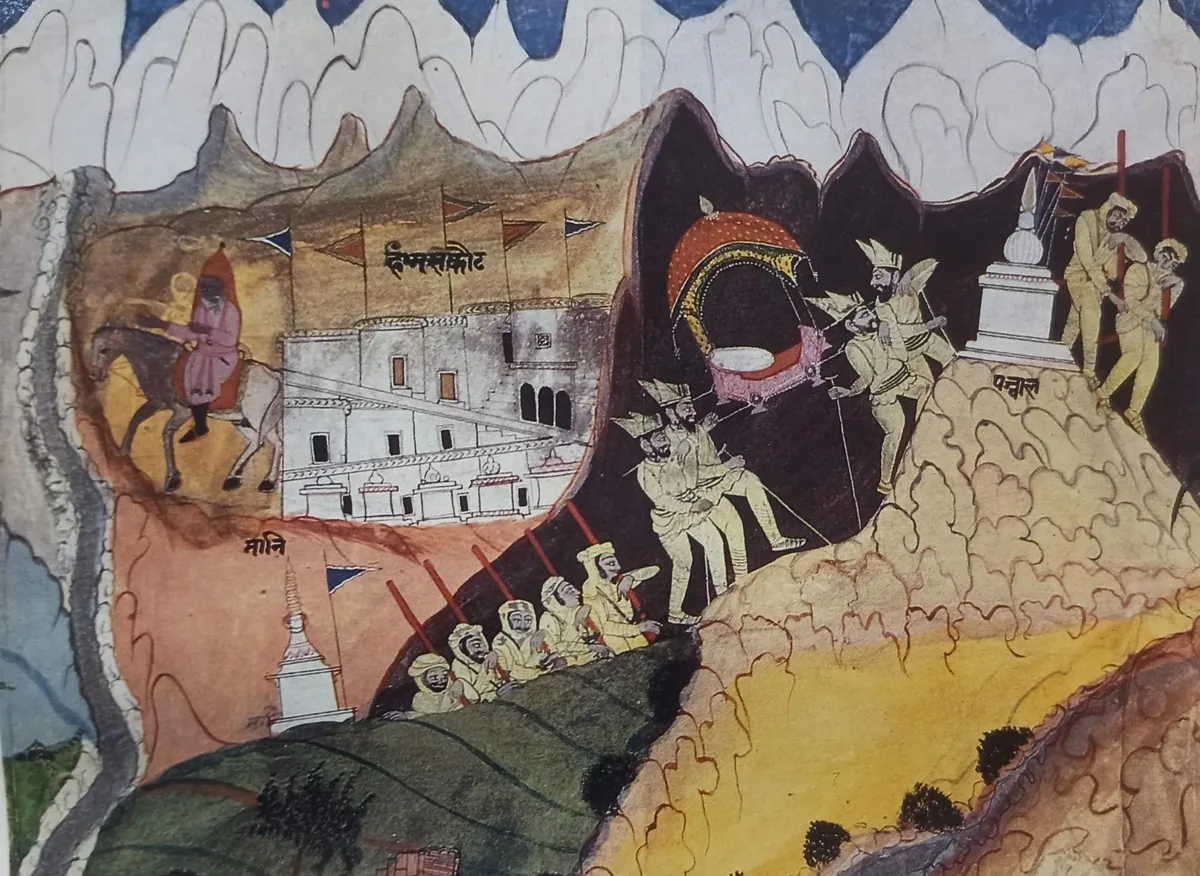
HISTORICAL SCROLLS & BATTLE DICTIONARIES: The museum archives preserve detailed contemporary painted scrolls documenting Zorawar Singh's campaigns across Ladakh, Baltistan, and the disastrous expedition into Western Tibet toward Mount Kailash and Lake Manasarovar, where the general met his heroic death in a blizzard-swept battle at 15,000 feet in December 1841.
MEMORIAL SHRINES: Within the fort courtyard, active shrines dedicated to Goddess Kali and Lord Shiva - established by the original Dogra garrison - are maintained daily by Indian Army personnel, continuing nearly two centuries of unbroken martial tradition.
SIKHS, DOGRAS, AND BALTIS IN ARMS: Interactive exhibits detail how Zorawar Singh incorporated conquered Ladakhi and Balti warriors into his auxiliary forces, creating a unique mountain warfare corps equipped with specialized snow goggles made of woven yak hair, sheepskin poshteens, and spiked crampons that enabled forced night marches across frozen passes like Namika La and Fotu La.
The Royal Jaishree Coin Mint: Economic Subjugation of Trans-Himalayan Trade
Answer-First Summary: How the Dogras melted Ladakhi royal currency to establish complete financial control over the Silk Route.
Beyond its military garrison, Zorawar Fort functioned as the financial nerve center of occupied Ladakh.
THE SUPPRESSION OF THE NAMGYAL CURRENCY: Prior to 1834, the Namgyal kings of Ladakh minted their own silver currency, known as the 'Ja'u'. These small silver coins circulated across the Western Himalayas, Spiti, and Western Tibet. Following the capture of Leh, Zorawar Singh dismantled the royal mint at Leh Palace and re-established it inside the fortified walls of Zorawar Fort.
THE JAISHREE COINAGE: Under Dogra administration, tons of old Ladakhi silver ja'u coins were melted down and re-struck with Dogra insignia, known as 'Jaishree' rupees. This monetary reform allowed Jammu to impose hefty customs taxes on every caravan carrying pashmina wool from Changthang, charas from Yarkand, and saffron from Kashmir, cementing Ladakh's integration into the burgeoning Princely State of Jammu and Kashmir.
CUSTOMS CONTROL & BAZAAR TAXATION: The Dogra revenue collectors stationed at the fort maintained strict fiscal control over Leh's bustling trade mart. Caravan bashi (caravan leaders) arriving from Kashgar, Khotan, and Tibet were escorted directly to the fort's treasury to exchange their bullion for Dogra coin and pay the transit duties that funded the military occupation and road-building projects throughout the Indus Valley.
Motorcycle Route Logistics: Easy 2 km Cruise from Leh City Center
Answer-First Summary: Navigating Skara road, parking logistics, and integrating the fort into your city tour.
The motorcycle ride to General Zorawar Fort is an effortless, relaxing urban excursion that can be completed in under 10 minutes from any central Leh hotel.
ROUTE FROM CHANGSPA & MAIN BAZAAR: From Ride & Fire Rentals in Changspa, head south along Fort Road toward Skara. Pass the Leh Main Market perimeter and take the marked left branch onto General Zorawar Road. The entire route is paved with smooth asphalt, passing traditional Ladakhi bakery shacks and willow gardens before terminating directly at the fort's outer gate.
PARKING & PAVED COURTYARD: A spacious, paved visitor parking apron is situated directly outside the entrance ticket gate. Unlike the congested, steep pedestrian alleys surrounding Leh Palace, Zorawar Fort features wide, level parking with ample space for large adventure motorcycles fitted with full luggage panniers.
RIDER ADVICE: Because the fort lies in an active residential and cantonment area, maintain a sensible speed of 25 to 30 km/h, watch for pedestrians crossing near local schools, and keep your motorcycle's exhaust baffles installed.
ROAD PROFILE & APPROACH HAZARDS: The approach along Fort Road is generally flat with minimal gradient, making it an ideal first ride for motorcyclists who have just collected their machines. Keep an eye out for slow-moving local transport omnibuses and wandering cows near the Skara vegetable market, and use gentle front brake modulation on the light dusting of sand often blown across the tarmac.
Senior Fleet Mechanic Advice: Urban Low-Speed Clutch Modulation & Engine Heat
Answer-First Summary: Stanzin Dorje explains low-gear traffic riding, cooling fan duty cycles, and battery charging in Leh town.
While highway pass riding stresses top-end power and brake fade, urban riding through Leh's city streets introduces distinct mechanical demands.
LOW-GEAR CLUTCH SLIP IN TOWN TRAFFIC: Maneuvering through Leh's narrow streets requires frequent stop-and-go riding in 1st and 2nd gear. Riders who continuously slip the clutch at high rpm will rapidly overheat the clutch friction plates, leading to lever fade and clutch drag. PILOT TIP: Shift cleanly into neutral when waiting at pedestrian crossings or busy junctions to allow the clutch pack to cool.
RADIATOR HEAT ACCUMULATION IN CONGESTION: In mid-summer, radiant heat reflected from stone buildings and asphalt causes engine temperatures to rise quickly when moving under 20 km/h. On modern liquid-cooled adventure bikes like the Royal Enfield Himalayan 450, your electric radiator cooling fan will kick on frequently. Never switch off the ignition with the kill switch while the radiator fan is screaming; let the bike idle in neutral for 30 to 45 seconds so coolant circulation can normalize engine cylinder temperatures.
BATTERY CHARGING IN LOW-RPM COMMUTING: Riding short 2 km hops around Leh at low engine rpm draws more electrical current (for headlight, brake light, and USB navigation charging) than the alternator produces. Take your rental machine for a brisk 15-minute run along the open NH1 airport bypass every evening to keep your battery primed at 12.8+ volts.
FUEL SYSTEM STABILITY & CONDENSATION: Short city hops prevent the engine from reaching full operating temperature, which can allow fuel condensation inside the crankcase during cool autumn mornings. Ensure that you take your machine on extended rides once your shakedown is complete to evaporate any blow-by moisture and preserve clean engine oil viscosity.
The Ideal Day 1 Acclimatization Landmark: Zero Strain at 11,500 Feet
Answer-First Summary: Why Zorawar Fort serves as the perfect medical shakedown destination for newly arrived Ladakh travelers.
Medical guidelines mandate that travelers arriving in Leh by air or rapid overland ascent must rest for at least 24 to 48 hours before undertaking strenuous mountain trekking or pass climbs, as outlined in our authoritative Leh Acclimatization Guide.
PHYSIOLOGICAL RECOVERY AT FLAT ELEVATIONS: Zorawar Fort sits at 11,500 feet - virtually identical to the baseline elevation of Leh town. Unlike Shanti Stupa (which requires climbing 500 steep stone steps) or Leh Palace (which involves steep uphill walking), Zorawar Fort features flat, level gravel paths around its ramparts and museum galleries. Visitors can stroll leisurely through the exhibitions without elevating their heart rate or straining their respiratory system.
EVALUATING MILD HYPOXIA SYMPTOMS: Spending 60 to 90 minutes walking through Zorawar Fort on the afternoon of Day 1 or Day 2 allows you to evaluate your physical acclimatization in a completely safe, low-stress environment. If you experience mild dizziness or headache, you are only 5 minutes away from your hotel and the hyperbaric oxygen facilities of SNM District Hospital.
HYDRATION AND REST PROTOCOLS: Combine your stroll through the fort with generous hydration - drinking at least 3 to 4 liters of clean water or electrolyte solution throughout the day. Avoid caffeinated energy drinks or alcohol, and take advantage of the quiet bench seating situated along the fort's tree-lined avenues to rest your legs and allow your body to naturally produce erythropoietin (EPO) to boost red blood cell count.
Senior Fleet Mechanic's 5-Point Town Shakedown Checklist
Answer-First Summary: Stanzin Dorje's quick pre-ride inspection before heading out from Leh city center.
Before rolling your machine out of your hotel courtyard, take 5 minutes to perform our basic pre-ride shakedown:
1. BRAKE LEVER FREE-PLAY: Verify that the front brake lever has firm resistance within the first 10mm of travel, and ensure the rear foot brake does not drag against the rear brake disc. In stop-and-go town riding, dragging rear brakes will boil brake fluid within 15 minutes.
2. TIRE COLD PRESSURES: Confirm cold tire pressures: 22 PSI front and 32 PSI rear. Riding on under-inflated tires in town produces sluggish steering response and causes excessive outer tread squirm on hot asphalt.
3. DRIVE CHAIN SLACK: Inspect drive chain slack; it should measure 25 to 30 mm while resting on the side stand. Apply a light spray of dry wax lube if the chain rollers appear bare or dusty.
4. MIRROR ADJUSTMENT FOR TRAFFIC: Adjust both rearview mirrors so you have an unobstructed view of overtaking taxis and mini-buses along Leh's tight two-way roads.
5. HORN & HEADLIGHT TEST: Verify that your horn sounds crisply and your LED headlight low and high beams operate reliably for evening town cruising, especially as pedestrians in Leh frequently cross unlit roads after sunset.
Combining Zorawar Fort with Leh City Heritage Gems
Answer-First Summary: Crafting a seamless half-day heritage circuit: Hall of Fame, Central Asian Museum, and Shanti Stupa.
Zorawar Fort fits perfectly into a relaxed, culturally enriching half-day city tour without requiring long highway riding or physical exertion.
THE HALF-DAY LEH HERITAGE LOOP: Start at 10:00 AM at General Zorawar Fort, spending 1.5 hours exploring the Dogra ramparts and weapons museum. At 11:45 AM, ride 3 km west along the airport avenue to visit the Indian Army Hall of Fame Museum, where you can inspect modern high-altitude warfare gear from the Siachen Glacier conflict.
LUNCH & OLD TOWN EXPLORATION: Around 01:30 PM, return toward the center for lunch at an open-air cafe in the Main Bazaar. In the early afternoon, take a 5-minute stroll to explore the Silk Road trade artifacts at the Central Asian Museum, followed by a visit to the sacred tree at Datun Sahib.
SUNSET FINALE: Terminate your day around 05:30 PM with an effortless ride up to Shanti Stupa for a 360-degree sunset over Leh valley. This sequence keeps your travel distances under 15 km total while immersing you in the multifaceted history of Ladakh.
Visiting Hours, Entry Fees & Military Defense Protocols
Answer-First Summary: Operational timings, nominal tickets, photography rules, and zero-permit civilian access.
Visiting Zorawar Fort is simple, budget-friendly, and open to all travelers without administrative complications.
TIMINGS & ENTRY CHARGES: The fort and military museum are open daily from 09:00 AM to 05:00 PM (no midday closures). Admission is a nominal ₹30 for Indian citizens and ₹50 for foreign tourists. Motorcycle parking is free in the outer paved courtyard.
ZERO INNER LINE PERMIT REQUIRED: General Zorawar Fort is situated well within Leh municipal limits. Neither Indian domestic travelers nor foreign tourists require an Inner Line Permit (ILP) or Protected Area Permit (PAP) to visit.
PHOTOGRAPHY & DECORUM: Photography is permitted across the open ramparts, courtyards, and within the weapons museum galleries. As the facility is maintained by active Indian Army personnel, visitors are expected to maintain respectful behavior, keep their voices low, and avoid climbing on fragile mud parapets.
SECURITY VERIFICATION: You may be asked to present government photo identification (Aadhaar card, driver's license, or passport) at the entrance sentry post. Hand over your helmet and bulky daypacks at the cloakroom if requested by security staff.
Route Milestones, Elevation & Road Conditions
| Milestone | Elevation (ft / m) | Distance from Base | Key Facilities & Route Telemetry |
|---|---|---|---|
| Ride & Fire Rentals (Changspa) | 11,562 ft / 3,524 m | 0 km | Rental basecamp, full workshop, gear rentals, tour briefings. |
| Leh Main Market Perimeter | 11,500 ft / 3,505 m | 1.2 km | Paved city road, ATMs, pharmacy, bakeries, cafes. |
| Skara Road Junction | 11,480 ft / 3,499 m | 1.8 km | Turn left onto General Zorawar Road; green BRO sign. |
| Zorawar Fort Outer Gate | 11,500 ft / 3,505 m | 2.0 km | Paved parking lot, ticket counter, Indian Army security post. |
| Dogra Heritage Museum | 11,510 ft / 3,508 m | 2.1 km | 19th-century matchlock firearms, armor, cannons, historic scrolls. |
| Kali & Shiva Shrines | 11,515 ft / 3,510 m | 2.2 km | Active Dogra regiment temples within inner citadel courtyard. |
| Rammed Earth Ramparts | 11,530 ft / 3,514 m | 2.3 km | 360-degree views of Leh Palace, Tsemo, and Stok Kangri. |
| Indian Army Hall of Fame | 10,800 ft / 3,292 m | 5.2 km | Major military museum along NH1, Siachen warfare pavilion. |
Ready for Your Ladakh Motorcycle Adventure?
Navigating the complex checkpoints and steep elevations of UT Ladakh requires both legal compliance and mechanical reliability. At Ride & Fire Rentals, we offer locally registered motorcycles with the mandatory LA-02 yellow commercial plates, ensuring you clear every military and union checkpoint seamlessly. Our fleet is 100% fuel-injected and thoroughly checked before every handover at our Changspa Road workshop.
For external travel planning references, you can check the official Ladakh Tourism Portal or apply for permits via the LAHDC Leh Permit Portal.
Season Launch Offer
Book your motorcycle direct from our Changspa Road facility. Get a standard 25% direct booking discount, plus enter coupon code LADAKH5 at checkout for an extra 5% off (saving nearly 30% total) on your entire rental! This promotion is active until June 30.
Frequently Asked Questions
What are the visiting hours and entry fees for General Zorawar Fort in Leh? +
General Zorawar Fort is open daily from 09:00 AM to 05:00 PM throughout the week. Entry tickets cost a nominal ₹30 for Indian citizens and ₹50 for foreign tourists. Entry is free for children under 5 years of age. Motorcycle and car parking outside the gate is completely free.
Who was General Zorawar Singh, and why is the fort named after him? +
General Zorawar Singh Kahluria was the military commander of Raja Gulab Singh of Jammu. Renowned as the 'Napoleon of India', he led the 1834-1840 Dogra invasions that conquered Ladakh and Baltistan. He built this fortified mud citadel in 1836 to serve as his permanent military headquarters and currency mint in Leh.
Do I need an Inner Line Permit (ILP) to visit Zorawar Fort? +
No. Zorawar Fort is located within the central municipal boundaries of Leh city. Neither Indian domestic travelers nor foreign tourists require an Inner Line Permit (ILP) or Protected Area Permit (PAP) to visit the fort or its museum.
How far is Zorawar Fort from Leh Main Market, and can I ride there by bike? +
Zorawar Fort is located just 2 km south of the Leh Main Market along Fort Road / Skara Road (roughly a 5 to 7 minute ride). The route is fully paved, flat, and features a large dedicated parking area that easily accommodates motorcycles of all sizes.
Is Zorawar Fort suitable for Day 1 acclimatization in Leh? +
Yes, it is one of the best Day 1 destinations in Ladakh. Because it sits at the baseline altitude of Leh (11,500 ft) and requires no steep uphill hiking or stairs, visitors can stroll through the museum galleries and ramparts without placing physical stress on their cardiovascular system.
What exhibits can I see inside the Zorawar Fort Museum? +
The museum - maintained by the Indian Army's Fire & Fury Corps - displays authentic 18th- and 19th-century matchlock guns, Dogra talwar swords, iron chainmail armor, swivel cannons, battle scrolls, historic coins minted in Leh, and memorial shrines dedicated to Goddess Kali and Lord Shiva.
Where is the nearest petrol pump to Zorawar Fort? +
The nearest fuel stations are the Indian Oil (IOCL) petrol station in Choglamsar (5 km south) and the IOCL pump in Spituk (6 km southwest along the airport road). Standard petrol bunks in Leh city center are within a 5-minute ride.