
Quick Summary: Why is Chilling village a must-visit motorcycle destination from Leh?
Quick Answer: Chilling (10,500 ft / 3,200 m) is a historic artisanal village nestled 58 km southwest of Leh, carved deep into the towering vertical granite gorge of the roaring Zanskar River. Founded in the 16th century by King Jamyang Namgyal to settle master Newar metalsmiths from Nepal, Chilling remains the sole traditional copper, silver, and brass-crafting village in Ladakh. The motorcycle ride from Nimmu along the narrow cliffside Zanskar canyon road offers staggering raw geology, white-water rapids, and serves as the gateway to the world-famous Chadar frozen river winter expedition.
Into the Granite Maw: The Raw Splendor of Chilling & The Zanskar Gorge
Answer-First Summary: Discovering Ladakh's premier artisanal sanctuary tucked deep inside one of the deepest river canyons on earth.
While hundreds of adventure riders rush along the Srinagar-Leh highway or climb Khardung La, one of the most visually jaw-dropping canyon motorcycle rides in the Himalayas lies hidden just minutes off the main highway. Departing National Highway 1 at the iconic Indus-Zanskar Confluence at Sangam (km 33), an extraordinary single-lane ribbon of tarmac branches south, plunging headlong into the vertical granite abyss of the roaring Zanskar River canyon.
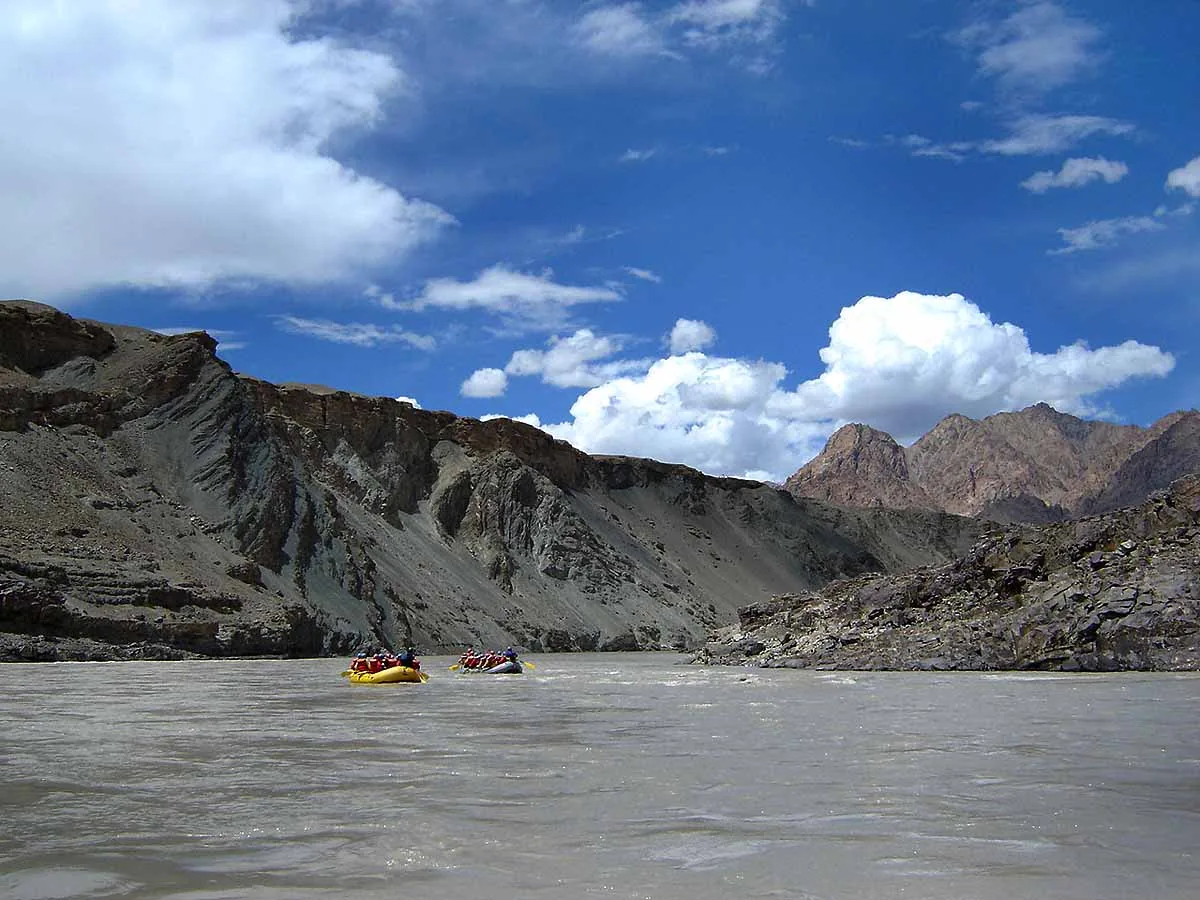
For the next 25 kilometers, the road winds through a staggering geological chasm where thousand-foot rock ramparts rise sheer from the churning turquoise and slate-gray waters of the river. Carved directly out of metamorphic bedrock by BRO Project HIMANK, this canyon corridor leads directly to Chilling - an idyllic emerald oasis of apricot orchards and stone-walled hamlets situated at an elevation of 10,500 feet (3,200 meters).
For motorcyclists riding with Ride & Fire Rentals, Chilling represents the perfect day ride: an intimate encounter with raw Himalayan geology, an effortless low-altitude acclimatization environment, and a living historical portal into four centuries of royal metallurgical craftsmanship.
Four Centuries of Metalcraft: The Royal Nepalese Newar Artisans of Chilling
Answer-First Summary: The extraordinary 16th-century saga of King Jamyang Namgyal, Nepalese metalsmiths, and Ladakh's sole coppersmith guild.
The cultural foundation of Chilling is unlike any other settlement in Ladakh. In the late 16th century, King Jamyang Namgyal reigned over Ladakh. Following an auspicious military and political alliance with the kingdom of Nepal, the King requested master craftsmen to build a colossal copper-gilt statue of Shakyamuni Buddha and sacred ceremonial tea cauldrons for the royal court at Shey Palace.
THE IMMIGRATION OF THE NEWAR SILVERSMITHS: A guild of master Newar metalsmiths journeyed across the high passes from the Kathmandu Valley to the royal palace in Ladakh. Marveling at their unmatched skill in repoussé metalwork, filigree, and copper casting, King Jamyang Namgyal granted the artisans hereditary agricultural lands and royal monopoly rights over all precious and non-precious metalcraft in the kingdom. The craftsmen selected this sheltered bend of the lower Zanskar gorge - abundant in timber for charcoal smelting, pure glacial water, and copper-bearing ore deposits - establishing the village of Chilling.
LIVING TRADITIONS & THE VILLAGE FORGES: Today, the direct descendants of those original 16th-century Newar masters continue to hammer glowing copper, brass, and silver in traditional earthen hearths. Visiting the family forges of Chilling, travelers can watch master silversmiths shape sacred ceremonial teapots (chabtso), copper chang (barley beer) containers, monastic trumpet horns (radong), and intricately chased silver amulet boxes (gau) using hand tools, anvils, and bellows identical to those used four centuries ago.
Canyon Route Telemetry: The 25 km Ride from Sangam Confluence to Chilling
Answer-First Summary: Navigating cliffside curves, overhang tunnels, and riverbed gravel transitions along the Zanskar canyon road.
The motorcycle ride from Leh to Chilling spans 58 kilometers and is divided into two contrasting chapters: the high-speed multi-lane military bitumen of NH1, followed by the technical, visceral cliff-hanging curves of the Zanskar River gorge.
HIGHWAY CRUISING (KM 0 TO KM 33): Departing Ride & Fire Rentals in Changspa, head west past Spituk and Gurudwara Pathar Sahib (km 25). After passing the magnetic anomaly straight at Magnetic Hill (km 30), the highway sweeps downward to the Sangam Confluence viewpoint at km 33. Here, take the marked left turnoff toward 'Zanskar / Chilling / Padum'.
THE ZANSKAR CANYON CORRIDOR (KM 33 TO KM 58): The moment you cross the concrete bridge spanning the Indus and enter the mouth of the Zanskar canyon, the environment transforms completely. The road narrows to a single-lane paved track hugging the sheer western cliff face. The asphalt is generally smooth, but frequent rockfalls deposit fist-sized stones along the road edge. You cruise through Tsogsti village (km 44) - a tiny green orchard clinging to an alluvial terrace - before arriving at the yellow suspension bridge of Chilling village at km 58.
PILOT CAUTION - BLIND TURNS & SOUND DEFLECTION: In a deep rock canyon, the roaring sound of Class IV river rapids drowns out engine noises. Do not rely on your hearing to detect oncoming vehicles; honk your horn twice before entering every blind rock corner, and keep your machine strictly to your left side of the narrow roadway.
The Chadar Frozen River Trailhead: Gateway to the Legendary Winter Trek
Answer-First Summary: How Chilling transforms into the primary staging ground for the world-famous frozen Zanskar river expedition.
While summer travelers know Chilling as a sun-drenched artisan oasis, the village holds legendary status among winter mountaineers as the definitive staging post for the 'Chadar' - the frozen river trek.
WINTER CLIMATE & RIVER FREEZING: Between mid-January and late February, ambient temperatures in the Zanskar gorge plummet to between -15°C during the day and -30°C at night. In this extreme sub-zero deep freeze, the surface of the roaring Zanskar River solidifies into a treacherous, gleaming sheet of white ice (the 'chadar', meaning 'blanket'). For centuries, when all high mountain passes were sealed beneath 20 feet of snow, this frozen river highway was the ONLY physical route connecting the 10,000 residents of Zanskar with the outside world in Leh.
CHILLING AS THE WINTER ROADHEAD: In winter, civilian vehicular traffic can travel no further than the road terminus just past Chilling. Here, adventurous trekkers strap on micro-spikes and step off the gravel roadhead directly onto the glass-like river ice, accompanied by local Zanskari porters pulling sledges. For motorcyclists riding in October or early November before full freeze-over, you can witness the surreal initial formation of pancake ice along the river margins while ambient temperatures hover around 0°C.
Senior Fleet Mechanic Advice: River Spray, Brake Rotor Maintenance & Gravel Slopes
Answer-First Summary: Stanzin Dorje explains how river mineral spray, wet brake pads, and loose scree affect adventure motorcycles.
At Ride & Fire Rentals, our mechanics frequently inspect motorcycles returning from the Zanskar canyon. While the road is mostly paved, the unique riverbed environment introduces specific mechanical considerations.
RIVER SPRAY & ROTOR CORROSION: In mid-summer (July and August), rapid glacial melting upstream in Zanskar turns the river into a roaring, high-volume torrent. In narrow canyon choke points, river mist and fine water spray drift across the roadway. The silt carried by glacial runoff is packed with abrasive quartz and mineral sediment. When wet silt coats your hot brake discs and brake pads, it forms a grinding paste that rapidly scores rotor surfaces and wears out organic brake pads. PILOT PROTOCOL: When returning from Chilling, hose down your front and rear brake calipers with clean water to flush out trapped river grit.
ENGINE TEMPERATURE DYNAMICS IN DEEP CANYONS: The deep granite gorge traps heat during midday hours (28°C to 30°C in July), but the rushing glacial river produces cool micro-currents near the road surface. Modern liquid-cooled engines like the Himalayan 450's Sherpa 452 engine manage this easily, but carbureted or air-cooled thumpers should be monitored on sustained 2nd-gear climbs up the canyon side roads.
TIRE TREAD & GRAVEL SLIPPAGE: The 2 km spur road climbing from the riverside bridge into upper Chilling village consists of unpaved, loose river gravel and compacted silt. Maintain 22 PSI front and 32 PSI rear tire pressure; avoid grabbing a fistful of front brake on the loose downhill gravel turns when returning to the highway.
Senior Fleet Mechanic's Steering Geometry & Low-Speed Balance on Cliffside Ledges
Answer-First Summary: Mastering slow-speed stability, clutch feathering, and footpeg weighting along single-lane canyon roads.
Riding a 200-kilogram adventure motorcycle along a single-lane mountain road perched 200 feet directly above a raging glacial river tests your low-speed riding fundamentals.
CLUTCH FRICTION ZONE CONTROL: Navigating narrow cliffside ledges requires continuous speed modulation between 15 and 30 km/h. Relying solely on the throttle creates jerky on-off driveline lash that upsets the chassis. Instead, engage 2nd gear, set the engine rpm at a steady 2,500 to 3,000 rpm, and slip the clutch lightly through its friction zone while dragging the rear brake. This stabilizes the motorcycle, allowing you to crawl past oncoming local utility trucks without stalling.
HEAD & VISION DISCIPLINE: Novice riders frequently fall victim to target fixation, looking down at the rushing white-water rapids 200 feet below rather than looking ahead through the corner. Always look where you want the motorcycle to go: keep your chin up, scan the road 50 meters ahead, and track the inside cliff wall to maintain a safe, disciplined line away from the unprotected canyon edge.
SUSPENSION PRELOAD FOR UNPAVED SPURS: The side tracks leading to the upper artisan workshops in Chilling feature water runoffs and bedrock steps. Ensure your rear shock preload is set appropriately so the motorcycle maintains at least 200 mm of ground clearance, preventing your engine sump guard from bottoming out on protruding granite rocks.
Fuel Planning & Range Mathematics: Leh to Chilling Round-Trip Logistics
Answer-First Summary: Calculating 116 km round-trip fuel requirements, pump locations, and zero-fuel dead zone realities.
Fuel planning for the Chilling day loop is straightforward, provided you understand the absence of retail infrastructure once you leave the highway.
THE 116 KM ROUND-TRIP EQUATION: The total distance from Leh Main Market to Chilling and back is exactly 116 kilometers. A modern single-cylinder motorcycle (such as a Royal Enfield Himalayan 450, Scram 411, or KTM 390 Adventure) will consume approximately 3.8 to 4.5 liters of fuel for the entire round trip.
COMMERCIAL FUEL PUMP AVAILABILITY: There are ZERO petrol stations along the 25-kilometer Zanskar canyon road or in Chilling village. The nearest retail fuel stations are located in Leh (58 km east) and in Khaltse (63 km west on NH1). However, since every rental motorcycle departs Ride & Fire with a full tank (11 to 17 liters capacity), you will easily complete the Chilling ride with over 60% of your fuel remaining.
THE EXTENDED ZANSKAR EXPEDITION WARNING: If you are not merely taking a day trip to Chilling, but rather continuing deep into Zanskar along the newly opened Nimmu-Padum-Darcha (NPD) strategic road, Chilling marks the point of no return. The next commercial petrol pump heading south is in Padum - over 230 kilometers away across extreme, unpaved terrain. Long-distance Zanskar expeditions must carry external fuel jerry cans as detailed in our Ladakh Cost & Fuel Guide.
Cultural Etiquette, Homestays & Artisan Workshop Visits in Chilling
Answer-First Summary: Interacting with master coppersmiths, buying handmade souvenirs, and savoring Ladakhi tea in village homes.
Visiting Chilling is an intimate cultural privilege that requires respectful traveler awareness.
VISITING TRADITIONAL FORGES: The artisan workshops in Chilling are located within private family courtyards. When you hear the rhythmic ring of hammers on anvils, follow the stone lanes to find the smiths at work. Always greet the craftsmen with a warm 'Julley' before entering, and ask for permission before taking photographs or recording video of the silversmithing process.
BUYING GENUINE HANDMADE SOUVENIRS: Unlike souvenir shops in the Leh Main Bazaar that frequently sell mass-produced factory brassware imported from Delhi or Nepal, purchasing copper mugs, silver amulets, or brass teapots directly from the craftsmen in Chilling guarantees 100% authentic, hand-forged Ladakhi artistry. Prices are extremely fair (ranging from ₹500 for a hand-hammered copper cup to ₹5,000+ for an ornate ceremonial silver tea flask), and 100% of the proceeds directly support the preservation of this endangered craft guild.
VILLAGE HOMESTAY HOSPITALITY: Several multi-generational families in Chilling operate cozy, traditional homestays. Guests are treated to wood-paneled Ladakhi kitchens heated by central bukharis, homemade hot wheat flatbreads (khambir), organic apricot jams, and bottomless cups of salty butter tea (gur-gur chai). Staying overnight allows you to experience the absolute silence of the Zanskar gorge under a starlit canopy.
Senior Fleet Mechanic's Suspension Setup for Rocky Riverbed Tracks & Canyon Washboards
Answer-First Summary: Tuning compression damping, tire contact patches, and chain slack for rocky river crossings and loose canyon washboards.
At Ride & Fire Rentals, our lead technicians prepare adventure motorcycles for the mixed terrain of the Zanskar River gorge. Once you cross the bridge into Chilling village or venture toward the Chadar roadhead at Tilat Sumdo, the smooth bitumen yields to broken rock aprons, loose river gravel, and severe corrugated washboards.
SUSPENSION COMPRESSION & REBOUND CALIBRATION: The sharp, square-edged rocks lining the Zanskar riverbed transmit violent shock loads into your front wheel. On adventure motorcycles like the Royal Enfield Himalayan 450 or KTM 390 Adventure, backing off rear shock preload by one notch (when riding without a heavy luggage load) allows the rear suspension to track smoothly over cobblestone washboards without kicking the rear wheel sideways under throttle.
TIRE PRESSURE ADJUSTMENTS FOR RIVERBED GRAVEL: While standard street pressure is 32 PSI rear on NH1, dropping your rear tire pressure to 28 PSI upon arriving in Chilling increases the tire's tractive footprint by roughly 20%. This larger rubber contact patch prevents the rear wheel from spinning helplessly in deep river sand when exploring riverside camping ledges or parking on loose scree terraces.
ENGINE BASH PLATE & EXHAUST HEADER DEFENSE: The steep, narrow tracks climbing between the lower forge and the upper village homes feature protruding granite boulders. Always ensure your motorcycle is equipped with a heavy-duty 4mm aluminum engine bash plate. A flying river rock tossed up by the front 21-inch tire carries enough kinetic energy to crack an unprotected aluminum crankcase or puncture fragile oil filter covers.
DRIVE CHAIN SLACK FOR CORRUGATED WASHBOARDS: Continuous washboard vibrations cause intense swingarm cycling. Ensure your drive chain has 25 to 30 mm of slack while the bike sits on its side stand; a chain adjusted too tightly will bind against the countershaft sprocket under deep suspension compression, stressing gearbox output bearings and risking catastrophic chain snaps in the remote canyon.
Permit Status, Checkpoints & Emergency Resources along the Zanskar Route
Answer-First Summary: Zero-permit day trips, military transit posts, and emergency communication in the deep gorge.
Navigating the administrative rules for riding to Chilling is simple for both domestic and international motorcyclists.
NO INNER LINE PERMIT REQUIRED: Chilling village lies within an open domestic tourism zone. Neither Indian citizens nor foreign international travelers require an Inner Line Permit (ILP) or Protected Area Permit (PAP) to visit Chilling or ride along the Zanskar canyon road as far as the Tilat Sumdo roadhead.
CHECKPOINTS & REGISTRATION: While there are no formal ILP barrier checkpoints between Nimmu and Chilling, an Indian Army administrative post operates near the Chilling bridge to monitor winter river conditions and manage heavy machinery traffic on the ongoing NPD highway expansion. Carry your original driving license and vehicle registration documents.
TELECOM & EMERGENCY SERVICES: Mobile phone connectivity (Jio, Airtel, BSNL) works reliably along NH1 up to Sangam, but signals drop completely once you venture 3 km into the Zanskar canyon. Chilling village has a local BSNL landline and a public satellite phone booth at the village post. The nearest primary health center is located at Nimmu (25 km north), while emergency trauma care is available at the military base in Leh (58 km).
Route Milestones, Elevation & Road Conditions
| Milestone | Elevation (ft / m) | Distance from Leh | Key Facilities & Route Telemetry |
|---|---|---|---|
| Leh Main Market | 11,562 ft / 3,524 m | 0 km | Ride & Fire Rentals, central workshops, IOCL fuel bunks, ATMs. |
| Spituk Military Outskirts | 10,830 ft / 3,301 m | 8 km | Ancient Gompa, airport runway perimeter, smooth multi-lane NH1. |
| Gurudwara Pathar Sahib | 11,500 ft / 3,505 m | 25 km | Historic Sikh shrine, 24/7 hot langar, water refill, parking bay. |
| Magnetic Hill Straight | 11,000 ft / 3,353 m | 30 km | Gravity illusion marking box, 4-lane open military asphalt. |
| Sangam Confluence Viewpoint | 10,400 ft / 3,170 m | 33 km | Indus & Zanskar river junction, viewing deck, riverside cafes. |
| Zanskar Canyon Road Turnoff | 10,350 ft / 3,155 m | 34 km | Branch left onto single-lane cliffside tarmac; cellular signals drop. |
| Tsogsti Orchard Terrace | 10,420 ft / 3,176 m | 44 km | Tiny riverside farming hamlet, wild apricot trees, canyon shade. |
| Chilling Suspension Bridge | 10,500 ft / 3,200 m | 58 km | Yellow steel suspension bridge crossing Zanskar River to village. |
| Chilling Coppersmith Guild | 10,550 ft / 3,215 m | 59 km | 16th-century Newar artisan workshops, earthen forges, homestays. |
| Chadar Trailhead Roadhead | 10,500 ft / 3,200 m | 60 km | Terminus for winter ice trek; river staging and porter camps. |
| Tilat Sumdo Canyon Junction | 10,600 ft / 3,231 m | 66 km | Confluence of Tsarap & Zanskar rivers; continuing road to Padum. |
Ready for Your Ladakh Motorcycle Adventure?
Navigating the complex checkpoints and steep elevations of UT Ladakh requires both legal compliance and mechanical reliability. At Ride & Fire Rentals, we offer locally registered motorcycles with the mandatory LA-02 yellow commercial plates, ensuring you clear every military and union checkpoint seamlessly. Our fleet is 100% fuel-injected and thoroughly checked before every handover at our Changspa Road workshop.
For external travel planning references, you can check the official Ladakh Tourism Portal or apply for permits via the LAHDC Leh Permit Portal.
Season Launch Offer
Book your motorcycle direct from our Changspa Road facility. Get a standard 25% direct booking discount, plus enter coupon code LADAKH5 at checkout for an extra 5% off (saving nearly 30% total) on your entire rental! This promotion is active until June 30.
Frequently Asked Questions
What is the distance and road condition from Leh to Chilling? +
The total distance from Leh to Chilling is 58 km (roughly 1.5 to 2 hours of riding). The first 33 km along National Highway 1 is immaculate, wide double-lane asphalt. The remaining 25 km from Sangam to Chilling is a narrow, single-lane paved road cut directly into the vertical cliff face of the Zanskar River canyon, mostly smooth with occasional loose gravel patches.
Do I need an Inner Line Permit (ILP) to ride to Chilling? +
No. Chilling village is in an open civilian sector of Ladakh. Neither Indian domestic travelers nor foreign tourists require an Inner Line Permit (ILP) or Protected Area Permit (PAP) to ride to Chilling, visit the artisan workshops, or explore the lower Zanskar gorge.
What makes Chilling village famous in Ladakh? +
Chilling is historically famous as Ladakh's sole traditional copper, silver, and brass-crafting village. Founded in the 16th century by King Jamyang Namgyal to settle master Newar metalsmiths from Nepal, the village preserves centuries-old metallurgical traditions. Chilling is also world-renowned as the roadhead for the winter Chadar frozen river trek.
Is there mobile phone network coverage in Chilling? +
Mobile phone reception (Jio, Airtel, BSNL) is available along the main highway from Leh to Sangam, but drops completely once you enter the deep Zanskar River gorge past km 35. Chilling village has limited satellite communication and landlines, so expect complete cellular disconnection during your ride.
Where is the nearest petrol pump to Chilling? +
There are no fuel pumps along the Zanskar canyon road or in Chilling. The nearest petrol stations are located in Leh (58 km east) and in Khaltse (63 km west on NH1). A full fuel tank before departing Leh easily covers the entire 116 km round-trip journey with substantial reserve.
Can I visit Chilling during winter on a motorcycle? +
The road from Leh to Chilling is kept open by BRO Project HIMANK for most of the winter to support local logistics and Chadar trekkers. However, between December and February, black ice, sub-zero temperatures (-15°C to -25°C), and frozen river spray make winter motorcycle riding extremely hazardous. Proper thermal gear and studded or dual-sport tires are essential.
What can I buy from the coppersmiths in Chilling? +
Visitors can purchase authentic, hand-hammered copper teacups, traditional Ladakhi chang (barley beer) pitchers, ornate brass butter lamps, monastic prayer horns, and hand-chased silver amulet boxes (gau) directly from the artisan families at prices far lower than commercial tourist markets in Leh.